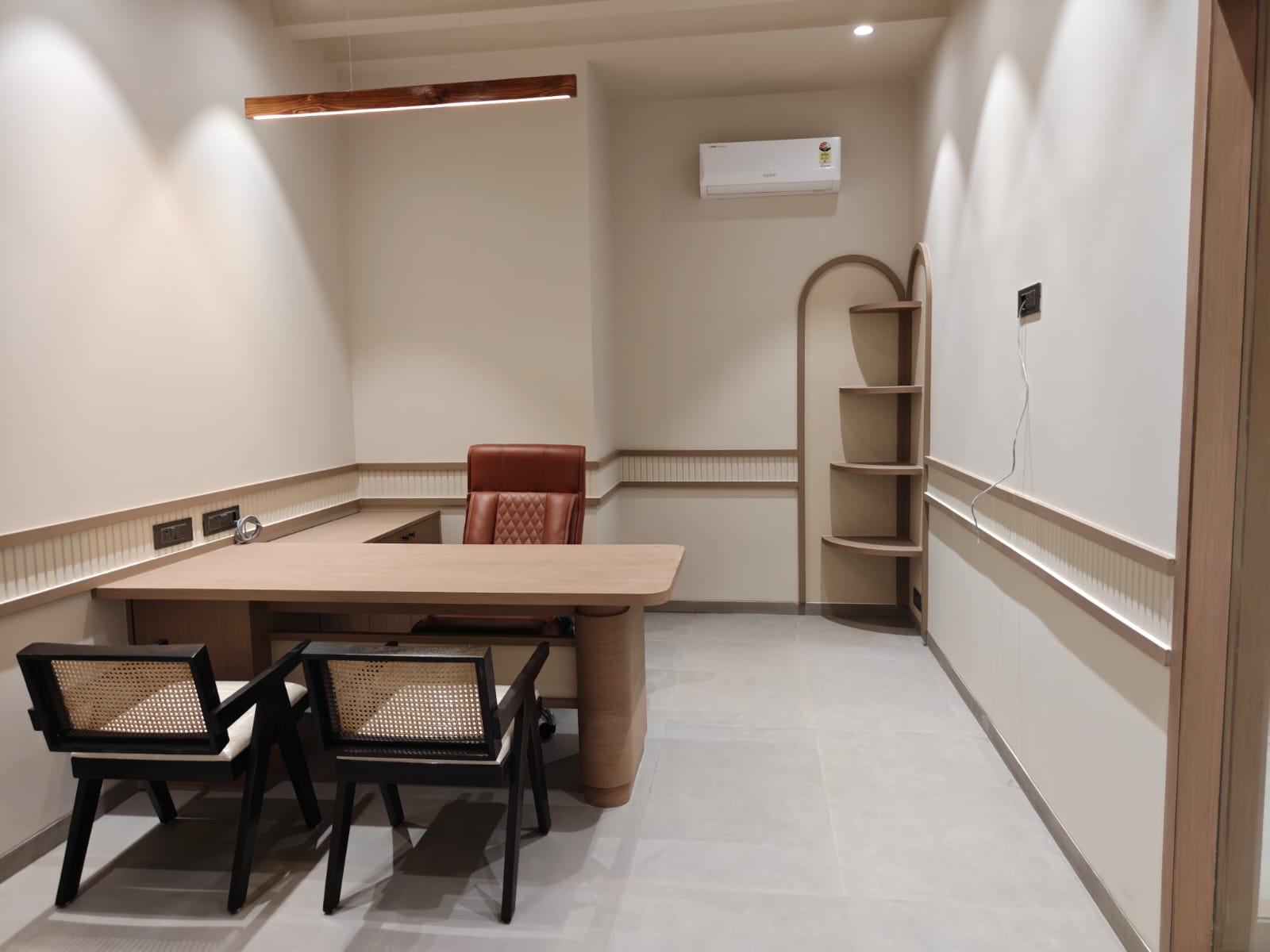
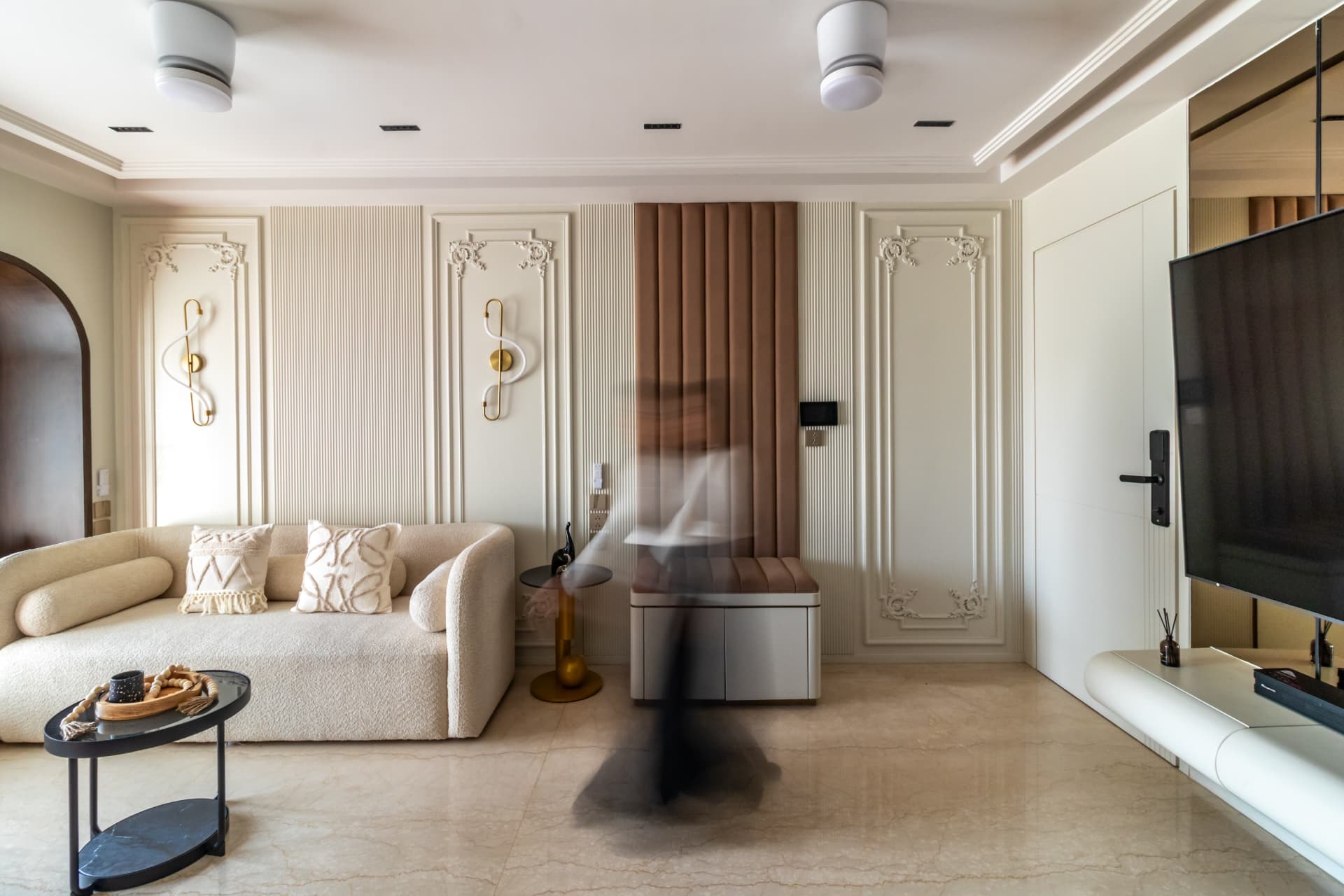
Material, light and the quiet home
Why the calmest rooms are rarely the emptiest ones — and how a short palette of honest materials does most of the work.
A quiet home is not an empty one. It is a room where nothing argues — where the floor, the joinery and the light agree on a single temperature and then stay out of the way. Most of the homes we are asked to design are already full of good things. The work is rarely addition. It is editing.
The brief behind calm
Clients seldom ask for calm in those words. They ask for a house that feels finished, for a living room that photographs the way it feels at seven in the evening, for storage that disappears. Underneath all of it is the same request: fewer decisions to make once you are home.
“A room should ask nothing of you when you walk into it. Everything else is decoration.”
A short palette
We work with three or four materials in a home, not ten. Oak, a warm stone, a plaster wall, and one metal. Repetition is what makes a plan read as one idea rather than a set of rooms designed on separate days. When a fifth material earns its place, it usually replaces one already there.
- 01See every sample in the flat itself, at morning and at night.
- 02Hold the metal against the stone before either is ordered.
- 03Check the darkest finish against the smallest room, not the largest.
- 04Leave one surface entirely plain and see if the room still holds.
Light comes first
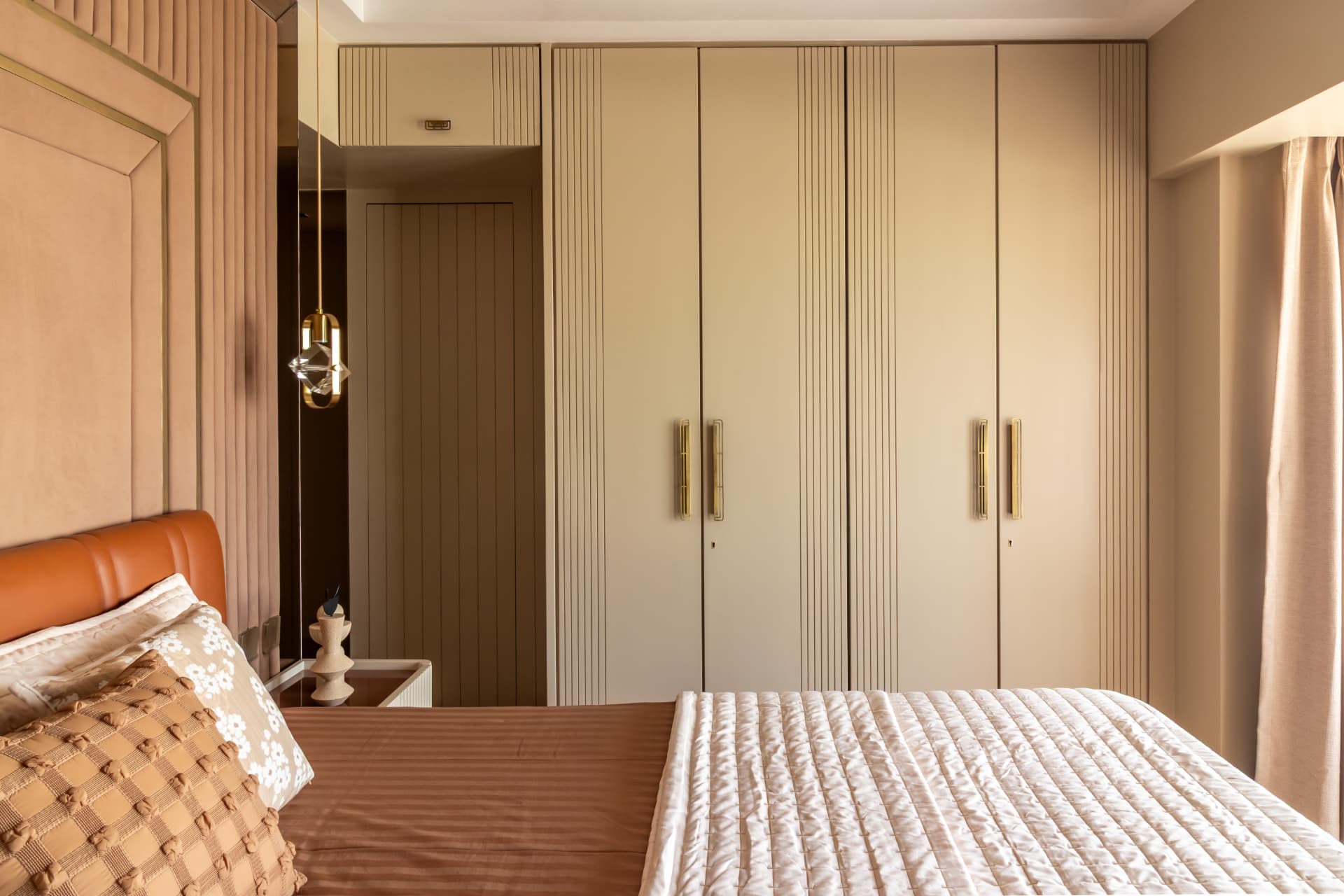
We plan light before furniture. Where the sun lands at four o'clock decides where the reading chair goes, and the lighting layout follows the plan rather than the ceiling grid. Warm, low and layered beats bright and even in almost every room of a home — the exception is the kitchen counter, which should be honest.
What we avoid
Trend finishes with a two-year life. Feature walls that need the rest of the room to stay silent. Joinery lines that do not align with a door or a window. None of these are mistakes exactly — they are simply things you notice again every day, and noticing is the opposite of rest.